Guides, playbooks, and learning resources to level up your cybersecurity knowledge and keep your organization secure.
Law enforcement in the US, UK and Canada identified more than $45 million in cryptocurrency and froze $12 million.
Download links were replaced by a Russian-speaking threat actor to distribute a recently emerged malware named STX RAT.
The malware mimics the legitimate Anthropic installation, relies on DLL sideloading, and cleans up after itself.
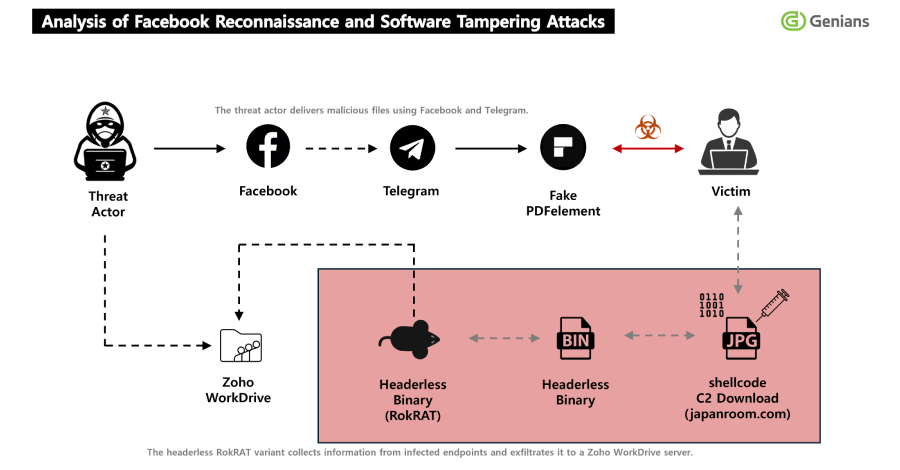
APT37 spreads RokRAT via Facebook and trojanized PDFelement accounts created Nov 10, 2025, enabling espionage and data theft.
The feature allows enterprise users to compose and read end-to-end encrypted messages natively on their mobile devices.
OpenAI revoked its macOS signing certificate after a malicious Axios dependency incident on March 31, 2026, preventing potential software misuse.
No description available.
A critical pre-authentication remote code execution (RCE) vulnerability in Marimo is now under active exploitation, leveraged for credential theft.
The vulnerability is tracked as CVE-2026-34621 and Adobe has confirmed that it can be exploited for arbitrary code execution.
CPUID breach served STX RAT via trojanized CPU-Z downloads on April 9–10, impacting 150+ victims and multiple industries.
Adobe patches CVE-2026-34621 after active exploitation since Dec 2025, preventing remote code execution via malicious PDFs.
An international law enforcement action led by the U.K.'s National Crime Agency (NCA) has identified over 20,000 victims of cryptocurrency fraud across Canada, the United Kingdom, and the United States.